
Adventure Program
- Tour
From $4,661 per person, discover Ecuador on a 10-day luxury adventure. Experience Quito's rich culture, explore the Amazon rainforest, and discover the unique wildlife of the Galápagos Islands.
- Duration
- 10 Days
From $6,000

From $4,661 per person, discover Ecuador on a 10-day luxury adventure. Experience Quito's rich culture, explore the Amazon rainforest, and discover the unique wildlife of the Galápagos Islands.
From $6,000
From $6,416 per person, discover Ecuador's flora and fauna on an 11-day adventure. Experience diverse wildlife of the Amazon rainforest, explore Quito's colonial past, and discover the incredible inhabitants of the Galápagos Islands.
From $7,600

The aptly named blue-footed booby is easily recognizable by its unusual bright blue feet. They can be spotted across many of the Galápagos Islands and are often diving underwater for a fresh catch of sardines, mackerel and other small fish. The best time to see the boobies is between June and August when they are breeding.

These birds are endemic to the Galápagos Islands and are the rarest penguin in the world. With fewer feathers and less body fat, they are the only penguins adapted to the tropical climate. They mate for life like all penguins, but unusually they don't have a clear breeding season. They can be seen across the islands, including on Ferdinanda and Isabela.

The waved albatross is the largest bird in the Galápagos Islands, its wingspan up to two and a half meters. They are exceptional gliders, spending most of their time over the open ocean. Couples mate for life. In March, they migrate to the archipelago's Española island and remain there for the rest of the year to breed.

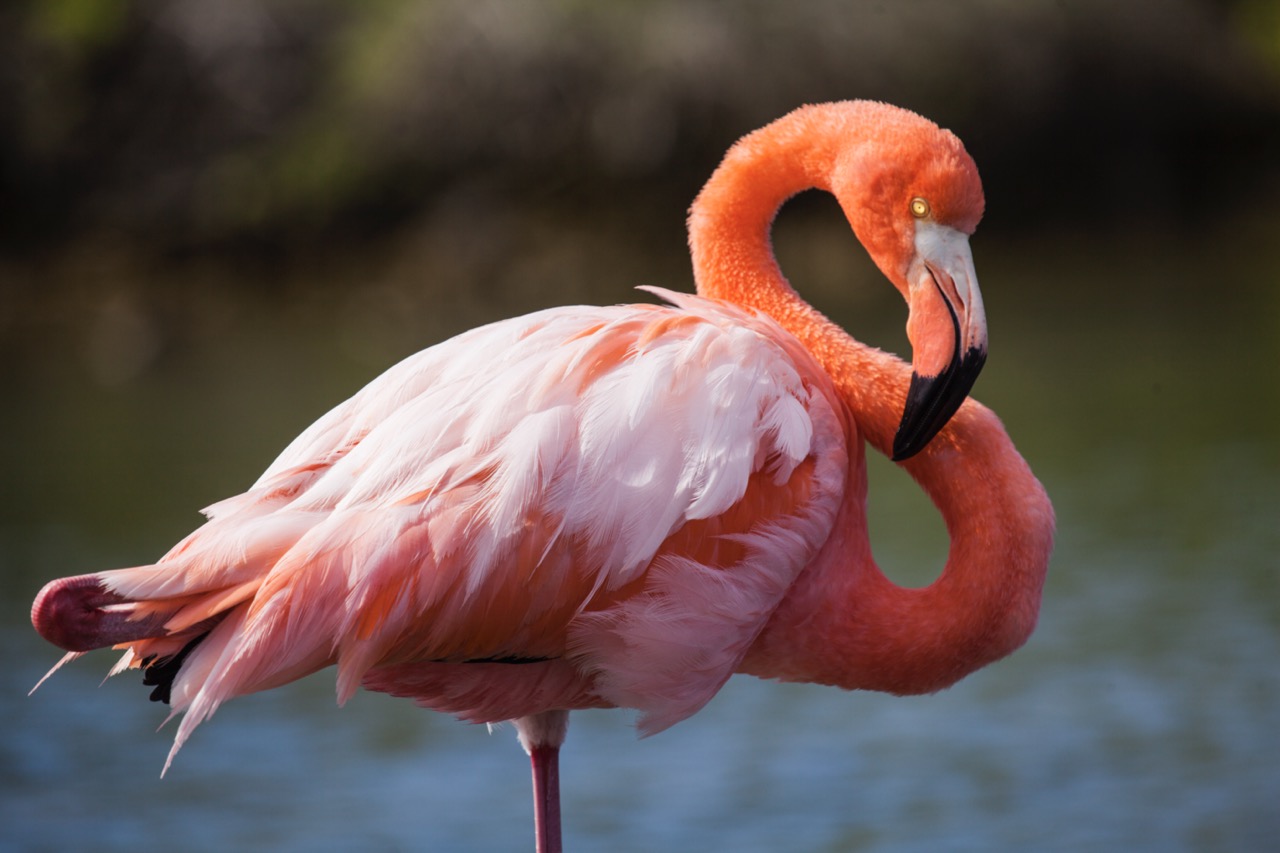
Iconic vibrant pink feathers and signature curving neck, the Galapagos is home to a few hundred American flamingo's.
While they are found across the Caribbean, the Galapagos population is genetically distinct, characterized by smaller bodies and smaller eggs. You will be able to see these birds on Isabela Island, Floreana Island, and Santa Cruz Island. Occasionally they may be sighted on Santiago and Rábida Island.
The iconic pink color is not innate; it is derived from carotenoid pigments found in their diet of algae, crustaceans, and microscopic plant material.